Root Canal Treatment in San Diego, CA
Tooth pain from an infected nerve is one of the most intense discomforts in dentistry — but relief is one appointment away. Dr. Robair Aldaya gently removes the infection, eliminates the pain, and saves your natural tooth.
Tooth Pain? Call Us — Same-Day Appointments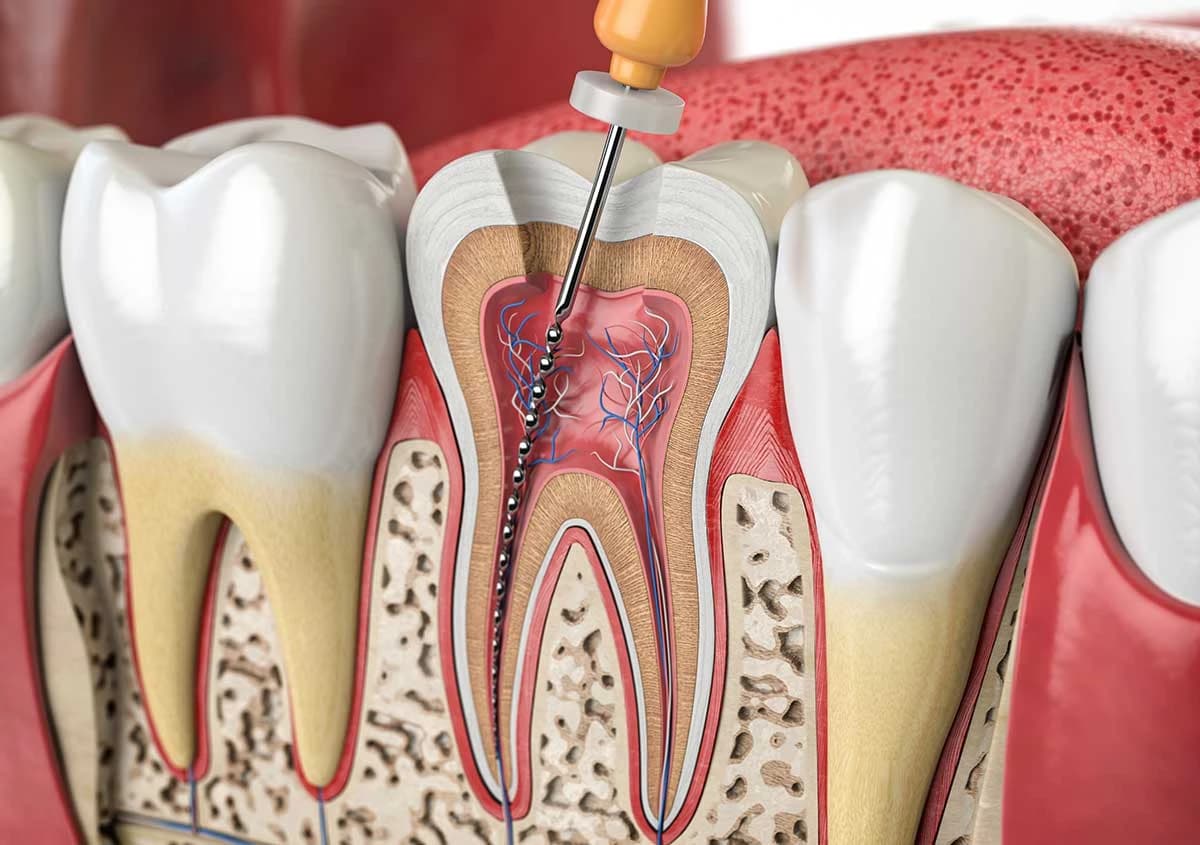
Most Insurance Accepted · Don't Wait on a Toothache
(858) 412-5777What Is a Root Canal?
Inside every tooth is a hollow space called the pulp chamber that contains soft tissue — nerves, blood vessels, and connective tissue — known as the dental pulp. When decay penetrates deep enough, or a tooth cracks, bacteria reach the pulp and cause an infection. The result is intense, often constant pain, swelling, and sometimes an abscess (a pocket of pus) at the root tip.
Root canal treatment — technically called endodontic therapy — resolves this infection by removing the infected pulp tissue, thoroughly cleaning and shaping the root canals, and then sealing them with a rubber-like material called gutta-percha. The tooth is then restored with a crown to protect it and return it to full function.
The most important thing to understand: a root canal does not cause pain. It ends it. The infection was the source of your pain — the procedure removes that source. Most patients feel significantly better within 24 to 48 hours of treatment and are back to normal eating and activity the next day.
Signs You May Need a Root Canal
These symptoms indicate the nerve inside a tooth may be infected. Do not wait — the infection will not resolve on its own and typically worsens over time.
- Severe, throbbing toothache that does not go away
- Prolonged sensitivity to hot or cold (lasting more than 30 seconds)
- Darkening or grayish discoloration of a tooth
- Swollen, tender, or pimple-like bump on the gums
- Pain when biting, chewing, or applying any pressure
- Jaw pain or swelling that radiates from a specific tooth
If you are experiencing any of these symptoms, call us at (858) 412-5777 — same-day appointments are available.
The Root Canal Procedure: Step by Step
Examination & X-Rays
Dr. Aldaya takes digital X-rays to evaluate the extent of the infection, the shape of the root canals, and the condition of the surrounding bone. This information guides the entire treatment plan. Local anesthesia is then administered to completely numb the tooth and surrounding tissues — you will feel pressure but no pain.
Pulp Removal & Canal Cleaning
A small opening is made through the top of the tooth to access the pulp chamber. Using precisely shaped instruments, Dr. Aldaya removes the infected pulp tissue from the chamber and each individual canal. The canals are then flushed with antibacterial solution to eliminate bacteria and debris.
Shaping & Sealing
Each canal is shaped to accept the sealing material, then dried thoroughly. The canals are filled with gutta-percha — a natural rubber-like material — and sealed with a dental adhesive to prevent any future bacterial entry. A temporary or permanent filling closes the access opening.
Crown Placement
A tooth that has had a root canal becomes more brittle over time and is at higher risk of fracture. Dr. Aldaya typically recommends placing a dental crown over the treated tooth to protect it and restore full biting and chewing strength. Crown placement is usually scheduled at a follow-up appointment two to three weeks later.
Root Canal Myths — Debunked
Fear of root canals often keeps patients from seeking treatment they need. Here is the truth behind the most common misconceptions.
Myth
"Root canals are extremely painful"
Modern root canals are no more uncomfortable than getting a filling. The infection and abscess cause the pain — the root canal eliminates it. Local anesthesia ensures you feel nothing during treatment.
Myth
"It is better to just pull the tooth"
Extracting a tooth creates new problems: bone loss, shifting of neighboring teeth, and the cost of an implant or bridge. Saving your natural tooth with a root canal is almost always the better long-term investment.
Myth
"Root canals cause illness"
This myth dates back to flawed research from the 1920s that has been thoroughly debunked. Modern scientific evidence shows root canal treatment is safe and does not cause systemic disease.
Myth
"Root canals kill the tooth"
The tooth remains alive — it is still connected to surrounding tissues and gets nutrients from them. The pulp (nerve and blood supply inside the tooth) is removed, but the tooth itself stays functional in your jaw for many years.
Recovery After a Root Canal
Most patients resume normal daily activities — including returning to work — the same day or the day after their root canal. The treated area will be sore and sensitive for 2 to 5 days as the surrounding tissues heal, but this is manageable with over-the-counter pain relievers like ibuprofen or acetaminophen.
- Avoid chewing on the treated side until the permanent crown is placed
- Take any prescribed antibiotics as directed to clear residual infection
- Use over-the-counter pain relievers for soreness — most patients need nothing stronger
- Eat soft foods for the first day or two: soup, yogurt, mashed potatoes
- Maintain normal brushing and flossing — keep the area clean
- Contact us if you experience worsening pain, swelling, or the temporary filling falls out
Once the permanent crown is in place, the treated tooth is fully restored. With proper oral hygiene and regular check-ups, a root-canal-treated tooth can last a lifetime.
Questions
Root Canal FAQ — San Diego
Is a root canal painful in San Diego?
Root canals have an unfair reputation — the procedure relieves the pain caused by the infected tooth, it does not create it. At Million Dollar Smile, Dr. Aldaya uses thorough local anesthesia so you feel no pain during treatment. Most patients are genuinely surprised by how comfortable the experience is. Mild soreness for a few days afterward is normal and easily managed with over-the-counter pain relievers.
How long does a root canal take?
A root canal appointment typically takes 60 to 90 minutes. Front teeth with one or two canals are usually completed in a single visit. Back molars with three or four canals may require a second appointment. A follow-up visit to place a permanent crown over the treated tooth is typically scheduled two to three weeks later.
Root canal vs. tooth extraction — which is better?
In most cases, saving your natural tooth is the better long-term choice. Your natural tooth provides superior chewing strength, maintains jawbone density, and keeps neighboring teeth aligned. Extracting a tooth and leaving the space leads to bone loss and shifting. Replacing it with an implant or bridge costs more overall than a root canal and crown. Dr. Aldaya always recommends saving the tooth when structurally possible.
How much does a root canal cost in San Diego?
Root canal costs in San Diego range from $800 to $1,500 depending on which tooth is treated and how many canals it has. A protective crown (recommended after most root canals) adds $1,200 to $2,500. Most dental insurance plans cover a significant portion of root canal therapy under major restorative benefits. We verify your coverage and provide a detailed estimate before any treatment begins.
What are the signs you need a root canal?
Common signs include: severe persistent toothache — especially when biting or chewing; sensitivity to hot or cold that lingers after the temperature source is removed; tooth darkening or discoloration; swollen or tender gums near the tooth; a recurring pimple-like bump on the gums; and pain that radiates to the jaw or ear. If you have any of these symptoms, call us at (858) 412-5777 — same-day appointments are available.
Tooth Pain? Call Us Today — Same-Day Appointments
Don't wait on a toothache. Early treatment means simpler treatment.
Call (858) 412-5777 Now